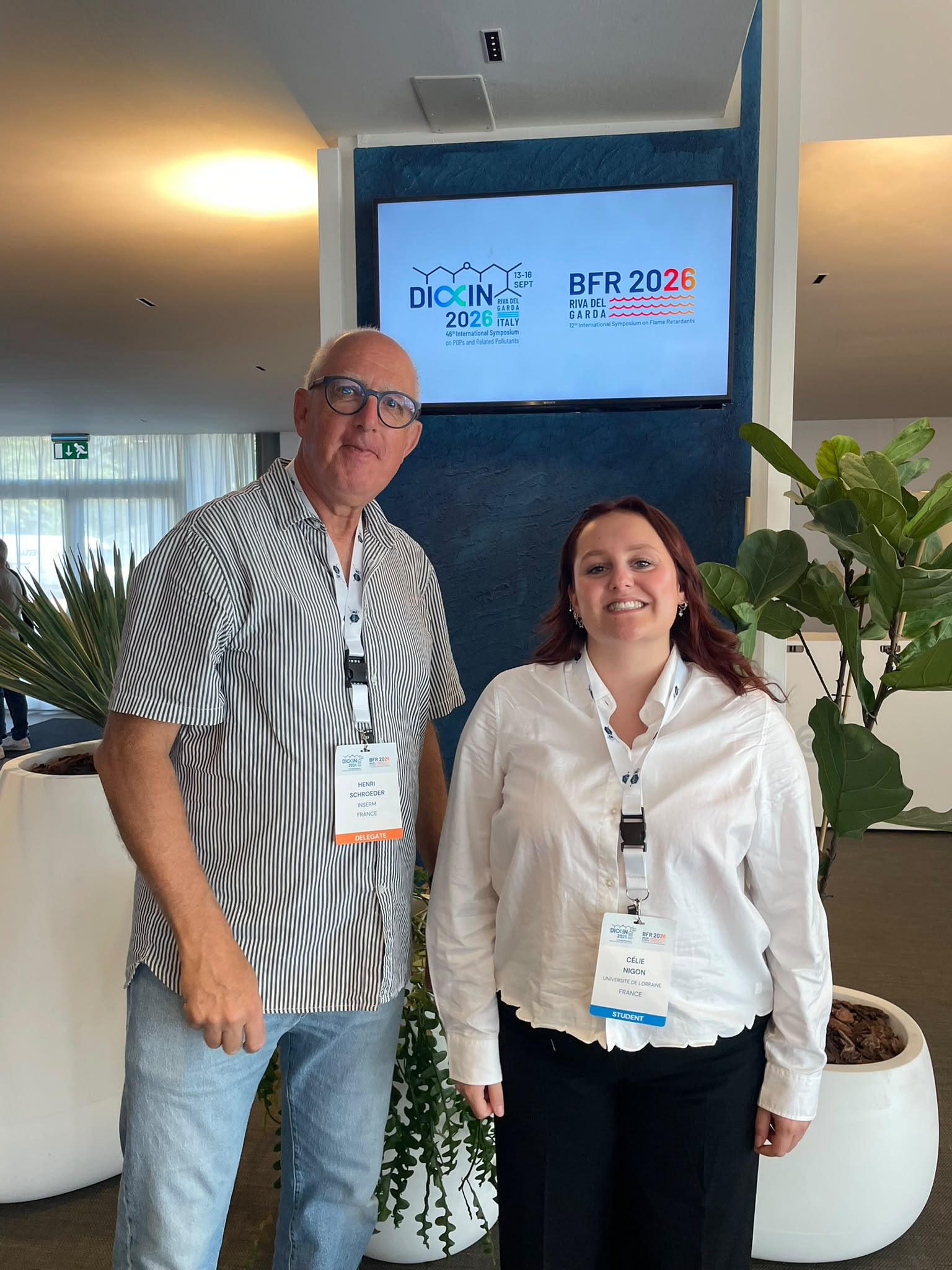
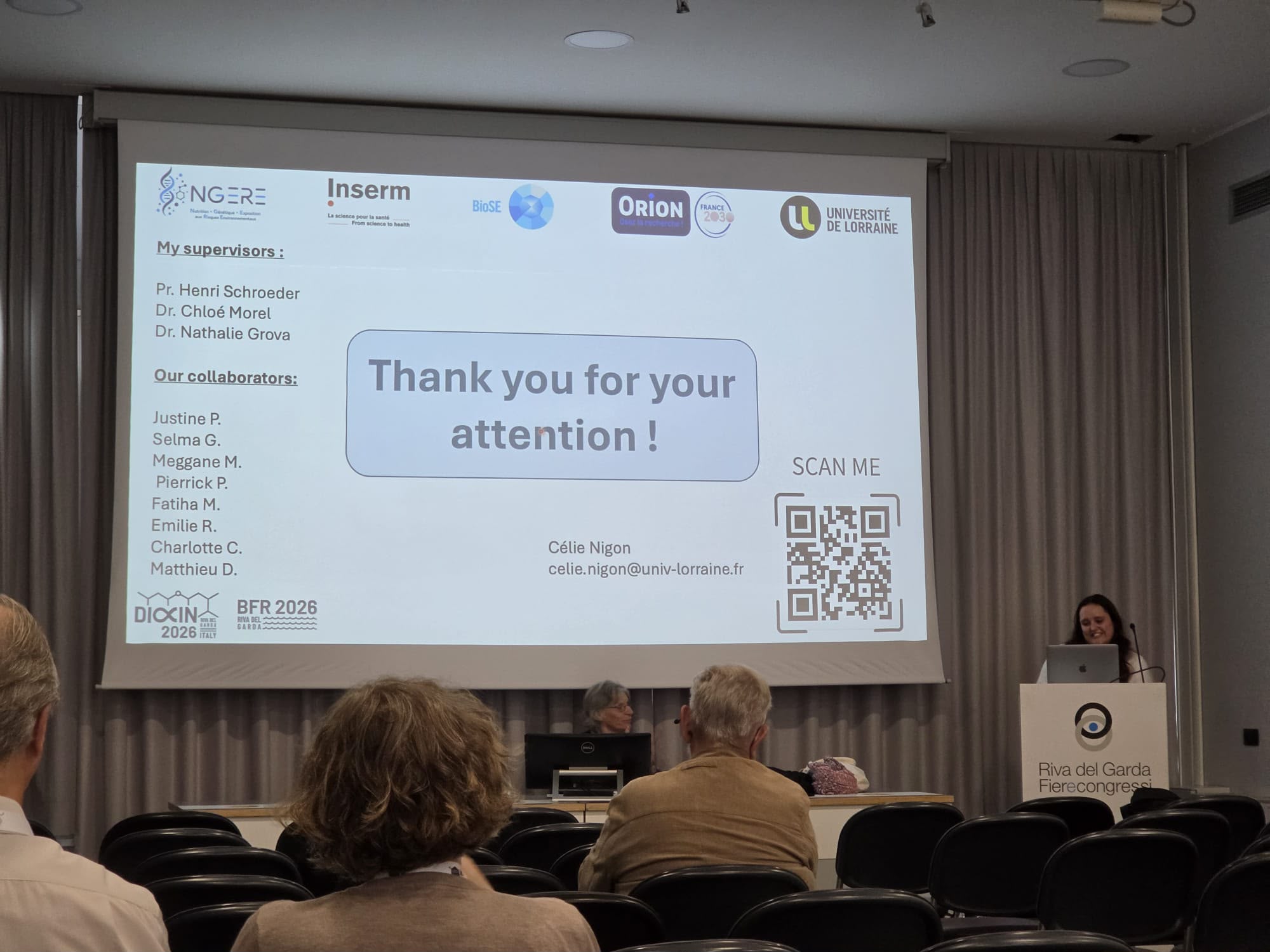


From 13 to 18 September 2026, PhD student Célie Nigon and Prof. Henri Schroeder represented NGERE at Dioxin 2026, the 46th International Symposium on Persistent Organic Pollutants (POPs) and Related Pollutants, held in Riva del Garda, Italy.
🌍 This international meeting brings together scientists investigating environmental contaminants, their fate in the environment and their potential effects on human health.
For NGERE, Dioxin 2026 provided an opportunity to present several studies investigating the neurodevelopmental consequences of early-life exposure to α-hexabromocyclododecane (α-HBCDD), a persistent brominated flame retardant.
🧪 One environmental contaminant, three complementary perspectives
HBCDD was widely used as a flame retardant, particularly in building insulation and various consumer products. Although its use in Europe has been restricted since 2015, its persistence in construction materials, waste, plastics, textiles and electrical and electronic equipment means that it remains a potential source of environmental exposure.
The studies presented at Dioxin 2026 are part of NGERE’s research into how exposure to environmental contaminants during sensitive periods of development may have long-lasting effects on the brain and behaviour.
Three communications addressed this question from complementary perspectives: behaviour and sex-specific effects, cerebral energy metabolism, and immune and neuroinflammatory processes.
🧠 Neurodevelopmental effects in female offspring
In the first study, presented by Célie Nigon, the team investigated the consequences of perinatal α-HBCDD exposure in female rats and compared them with those observed in an experimental valproic acid (VPA) model.
During early postnatal development and the juvenile period, several developmental and behavioural parameters were assessed, including ultrasonic vocalisations, olfactory discrimination, eye opening, nociceptive sensitivity, anxiety, locomotor activity, repetitive behaviours and social behaviour.
The results showed that α-HBCDD exposure induced several alterations in sensory development and anxiety-related behaviour in females, while social behaviour remained unaffected under the experimental conditions. Molecular alterations in cortical synaptic plasticity were also detected, including changes in SNAP25 and synaptophysin expression and increased mTOR expression.
Importantly, the behavioural profile differed from previous observations in males, further highlighting the importance of considering biological sex when assessing the neurotoxic effects of environmental contaminants.
🔬 Brain imaging to explore cerebral energy metabolism
A second study, also presented by Célie Nigon, investigated whether early-life α-HBCDD exposure affects cerebral energy metabolism using complementary in vivo and ex vivo approaches.
The study combined [18F]-FDG PET-CT imaging, histochemical assessment of cytochrome c oxidase activity, LC-MS/MS quantification of Krebs cycle intermediates, and molecular analyses of glucose metabolism markers.
While PET-CT imaging did not reveal significant metabolic alterations in α-HBCDD-exposed animals, complementary ex vivo analyses identified regional metabolic imbalances. Changes in Krebs cycle intermediates and dysregulation of key glucose metabolism markers were also detected.
Together, these findings suggest a remodelling of cerebral bioenergetics that may contribute to the behavioural alterations observed following developmental exposure to α-HBCDD. They also highlight the value of combining complementary analytical approaches to detect biological changes that may not be captured by a single imaging technique.
🧬 From systemic immune alterations to neuroinflammation
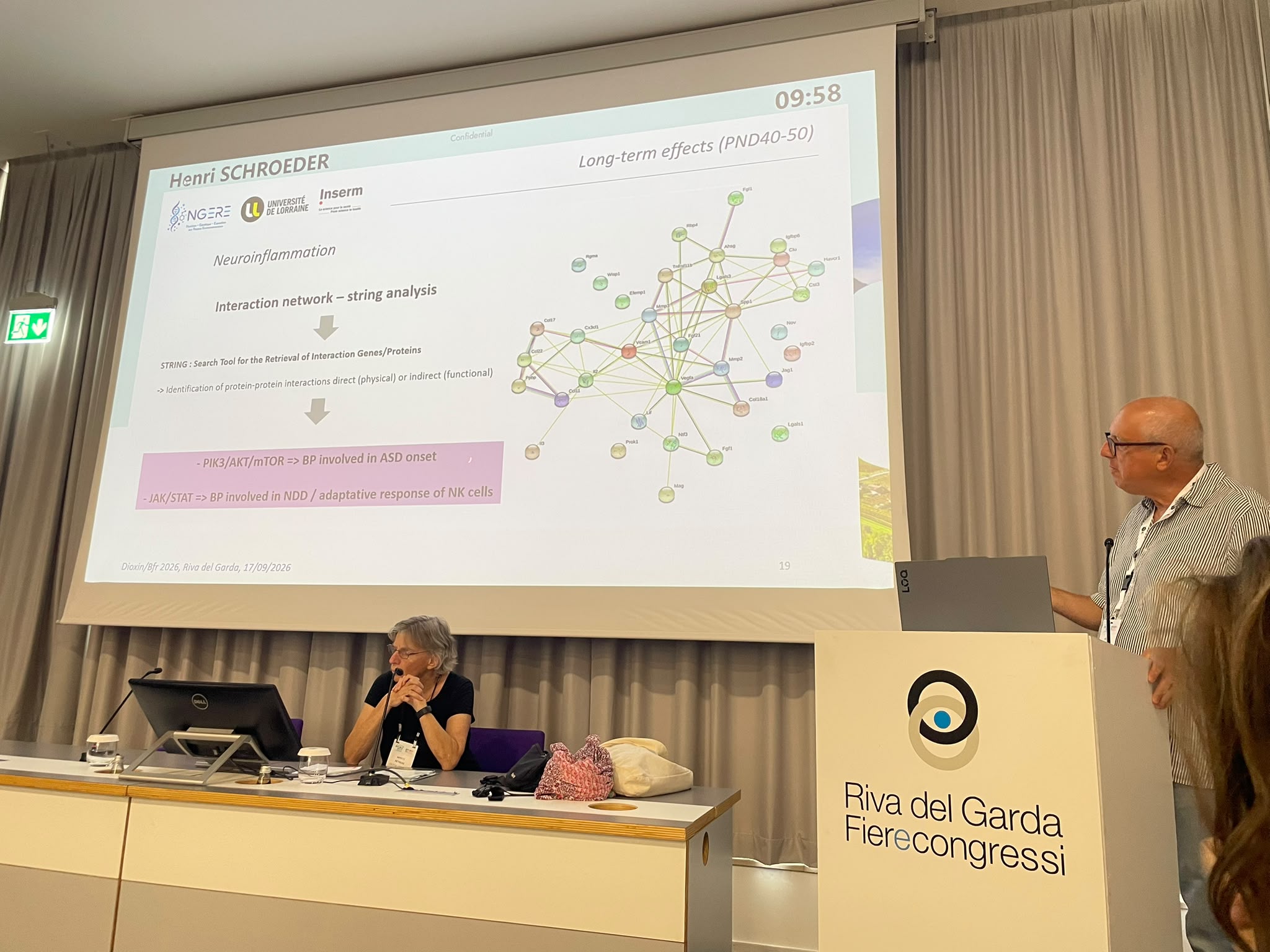
The third communication, presented by Henri Schroeder, focused on the potential contribution of systemic and cerebral inflammatory processes to the neurodevelopmental effects induced by α-HBCDD.
In male offspring, developmental exposure was associated with systemic immune alterations, including reductions in specific Natural Killer (NK) cell and T-cell populations. In the brain, increased microglial density in the cortex and hippocampus, astrocyte activation and dysregulation of multiple inflammation-related markers were observed.
Pathway analyses highlighted alterations involving JAK-STAT and PI3K-Akt signalling, together with changes in the expression of MMP-2, MMP-3, VCAM-1 and osteoprotegerin.
These findings provide further mechanistic insight into the potential contribution of immune dysregulation and neuroinflammation to neurodevelopmental outcomes following early-life α-HBCDD exposure.
🌱 Complementary approaches to better understand the exposome
By combining behavioural studies, brain imaging, cerebral bioenergetics, molecular biology, immunology and neuroinflammation, these three communications illustrate the complementary approaches developed within NGERE to investigate the complex relationships between environmental exposures and health.
They also emphasise the importance of studying environmental exposures during sensitive developmental windows, while considering sex-specific effects and the diversity of biological mechanisms potentially involved.
👏 These studies result from a collaborative effort involving Célie Nigon, Henri Schroeder, Chloé Morel, Nathalie Grova, Justine Paoli, Selma Goujon, Meggane Melchior, Pierrick Poisbeau, Fathia Maskali, Emilie Roeder, Charlotte Collet, Matthieu Doyen, and their research partners.
NGERE also warmly thanks ORION for supporting Célie Nigon’s mobility through a travel grant, which contributed to her participation in this international conference.