On the occasion of World Alzheimer’s Day, on 21 September, the NGERE – Nutrition, Genetics and Environmental Risk Exposure (U1256) laboratory is highlighting the research led by Catherine Malaplate through the ReLieF project, supported by the Fondation Alzheimer.
It is also an opportunity to discover — or rediscover — Catherine Malaplate’s researcher portrait, published by the Fondation Alzheimer following her selection as one of its 2025 awardees.
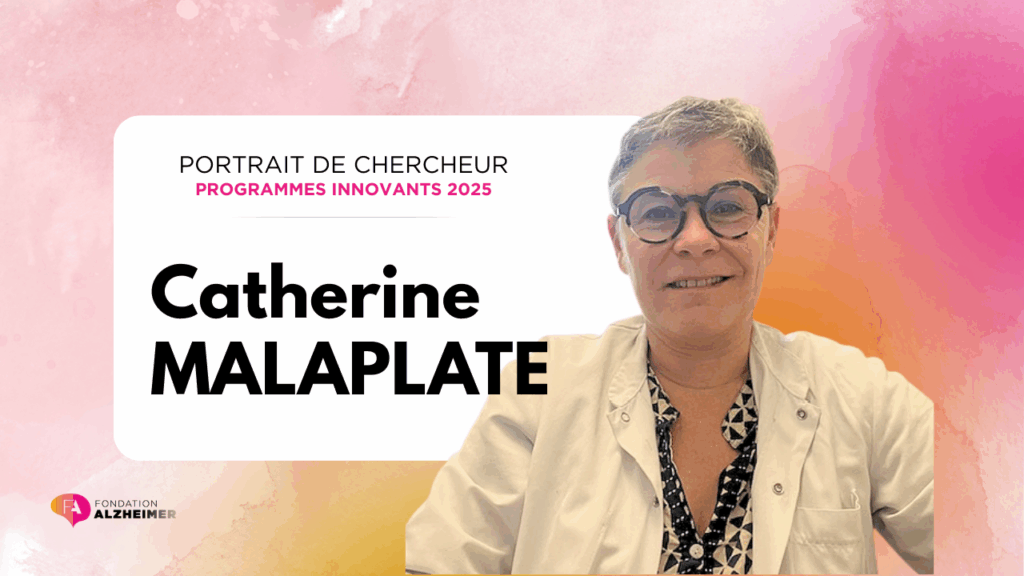
👉Discover Catherine Malaplate’s portrait on the Fondation Alzheimer website
🔬 Acting before brain damage becomes established
Alzheimer’s disease remains one of the leading causes of loss of independence among older people. Despite the progress made, currently available treatments mainly intervene after the formation of amyloid peptides, when brain damage is already underway and the brain’s compensatory capacities are beginning to become exhausted.
At NGERE, we are developing a different approach by focusing on the events that occur before the onset of the amyloid cascade. Our hypothesis is that alterations in the lipid homeostasis of neuronal and astrocytic membranes may represent a very early event contributing to the initiation of the disease.
🧬 Genetics, environment and communication between brain cells
With the support of the Fondation Alzheimer, the ReLieF project, led by Catherine Malaplate, will be conducted in two complementary stages. The first will aim to understand how genetic (ApoE4) and environmental (high-fat diet) risk factors disrupt communication between astrocytes and neurons and alter the organisation of brain cell membranes.
This approach is fully aligned with the research conducted at NGERE, which notably aims to better understand how genetic factors and environmental exposures interact in the development of human diseases.
🧪 Exploring a new strategy using nanoliposomes
The second stage will evaluate an innovative strategy based on bio-derived nanoliposomes, designed to restore the lipid supply to neurons and determine whether it is possible to act on these early mechanisms.
By improving our understanding of the very earliest stages of the disease, this project aims to pave the way for new therapeutic approaches designed to intervene before brain damage becomes irreversible and the brain’s capacity for plasticity is exceeded.
💙 Research in the fight against Alzheimer’s disease
World Alzheimer’s Day is also an opportunity to highlight the importance of fundamental and translational research in deciphering a complex disease whose underlying mechanisms begin to develop long before symptoms appear.
Through the ReLieF project, NGERE teams are therefore shifting the focus towards the earliest events in the disease process, with the aim of gaining a better understanding of the mechanisms that precede the amyloid cascade and exploring new avenues that could ultimately enable earlier intervention.