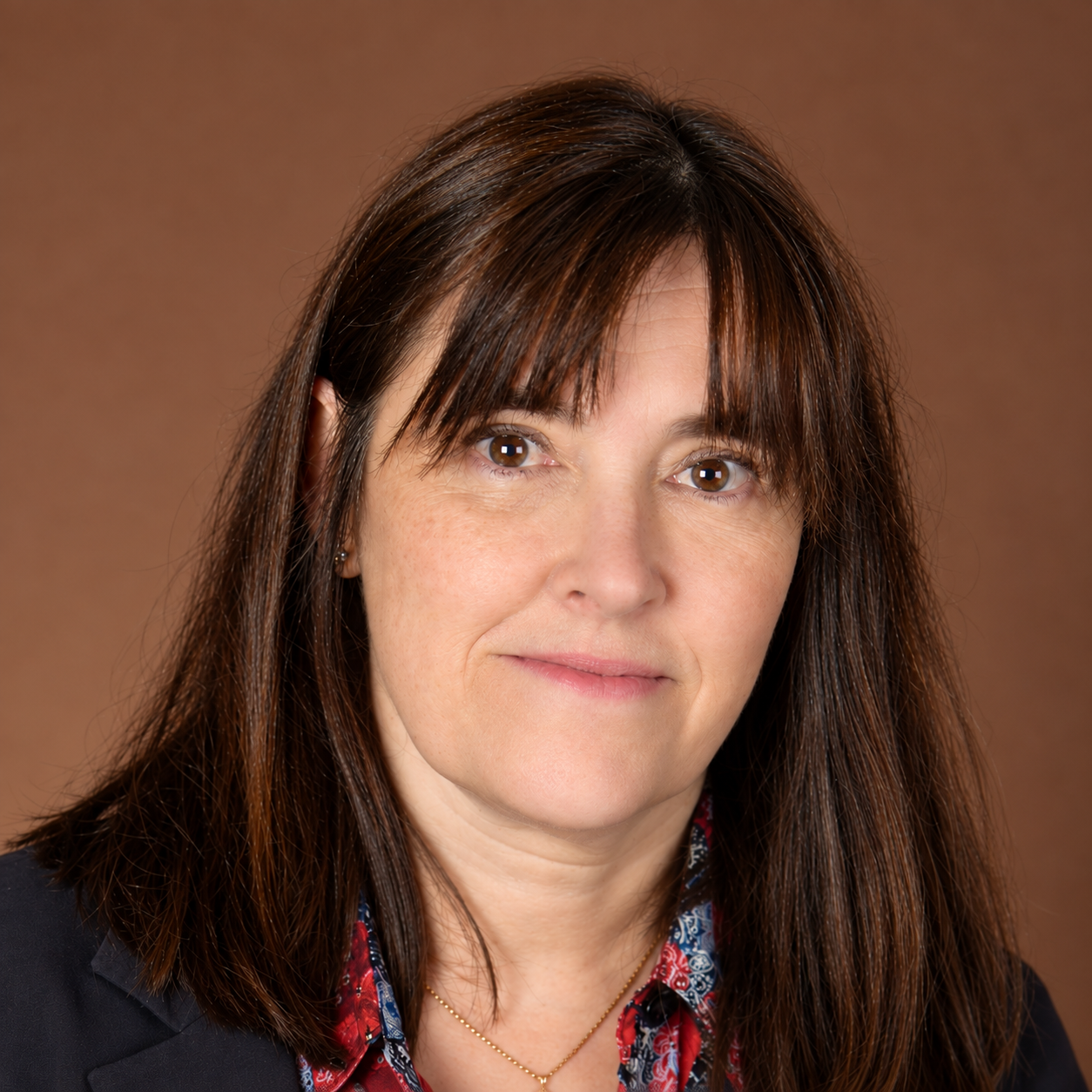
On Pink October, the month dedicated to raising awareness of breast cancer, we asked 8 questions to Isabelle Vuissoz, Professor of Cell Biology at the University of Lorraine and researcher at the N-GERE – Inserm U1256 laboratory.
For more than twenty years, Isabelle has devoted a significant part of her research to gaining a better understanding of breast cancer, particularly the mechanisms that enable tumour cells to migrate, spread, and develop resistance to treatment.
Following a scientific career that took her from Lille to Los Angeles and then Lausanne, she continued her research in Lorraine before joining N-GERE in 2025. She is now developing new projects focused on the identification of biomarkers and novel therapeutic targets.
🎀 On Pink October, discover her career path, her research, and what, after all these years, continues to inspire her in her work as a researcher!
Could you briefly introduce yourself and tell us about your career path leading up to N-GERE?
OOriginally from Metz, I am a Professor of Cell Biology at the University of Lorraine. After completing a PhD in Biochemistry at the University of Lille, focusing on nuclear receptors, I pursued my scientific career internationally, with a postdoctoral fellowship at UCLA in the United States in the field of cancer research, followed by a position as a contract lecturer and researcher at the University of Lausanne.
After returning to Lorraine, I gradually developed a research programme focused on cancer, and more specifically on breast cancer. Following several years at the CRAN laboratory, I joined the NGERE Inserm U1256 unit in 2025 to develop new projects aimed at identifying therapeutic targets.
What is the focus of your current research, and what role does breast cancer play in your work?
Breast cancer has been a major focus of my research for more than twenty years. I am particularly interested in the mechanisms that control tumour cell migration and their response to treatment. My work focuses especially on claudins, proteins involved in cell–cell junctions that can influence the ability of tumour cells to migrate and spread.
We have shown that re-expression of claudin-1 in certain triple-negative breast cancers can reduce cell migration and increase sensitivity to certain chemotherapies. This work was subsequently extended to the study of brain metastases and the search for biomarkers that could predict response to treatment. Joining N-GERE has now allowed me to broaden these approaches to new research questions, while maintaining a common thread: identifying cellular mechanisms and novel therapeutic targets.
What led you to become interested in breast cancer and this area of research?
This research direction developed gradually from my work on nuclear receptors and hormonal signalling. In the early 2000s, we investigated the effects of alcohol on oestrogen signalling in breast cancer cells, which opened up a new area of research focused on breast cancer.
My work subsequently shifted towards the development of new anticancer compounds, particularly thiazolidinedione derivatives, in collaboration with a team of chemists from the L2CM laboratory. This work led to the filing of a patent in 2013. Studying the mechanism of action of these compounds then led us to identify claudin-1 as a novel target, which has since become one of the central focuses of my research.
When we talk about breast cancer, we are actually referring to a group of very different diseases. What makes this cancer particularly complex to study and treat?
Some tumours are hormone receptor-positive (HR-positive), while others overexpress HER2. Triple-negative breast cancers lack these major therapeutic targets; they are particularly aggressive and more frequently affect younger women. In addition to this diversity, tumour cells can evolve over time and under the selective pressure of treatment, potentially leading to the development of treatment resistance and metastases. One of the major challenges today is therefore to identify biomarkers that can better characterise individual tumours and help tailor treatment accordingly.
Could you explain, in simple terms, a scientific question that your team is currently trying to answer?
We are particularly interested in understanding why some breast cancer cells become resistant to chemotherapy. In certain triple-negative breast cancers, claudin-1 is expressed at low levels. We have shown that restoring its expression can make these cells more sensitive to treatment. We are now seeking to understand the mechanisms involved and to determine whether claudin-1 could serve as a predictive biomarker of response to chemotherapy.
In practical terms, how is research conducted in your field? What does a typical day—or experiment—look like in your laboratory?
We generally start with a hypothesis that we test using cellular models. We can modify the expression of a gene, treat the cells with a drug, and then analyse their proliferation, migration, or survival. We also work with three-dimensional models, such as spheroids, which more closely reproduce certain features of tumours. A significant part of our work also involves data analysis, bioinformatics, and collaborations with clinicians and other specialists.
What message would you like to share with the general public about the importance of breast cancer research?
The progress made in breast cancer care is directly linked to advances in research. Treatments are now better tailored to the biological characteristics of individual tumours, but some forms of breast cancer remain difficult to treat, particularly when they become resistant to treatment or metastatic. It is therefore essential to continue supporting both basic and clinical research. Understanding the mechanisms that occur at the cellular level may seem far removed from patient care, but this knowledge often leads to the identification of new biomarkers and novel therapeutic strategies.
Pink October is also an opportunity to highlight the importance of screening and early diagnosis!
On a more personal note, what still inspires you most about your work as a researcher today?
What continues to inspire me above all is discovery. In research, an unexpected result can challenge a hypothesis and open up an entirely new avenue of investigation. I also greatly value the collaborative nature of this profession: exchanging ideas with researchers from other disciplines, collaborating with clinicians, as well as training and mentoring students and early-career researchers. Finally, what deeply motivates me is the feeling that my work can make a meaningful contribution to society. Advancing knowledge and contributing, even in the long term, to improving prevention, diagnosis, or treatment gives a strong sense of purpose to my work.